

Shkruan Qamil Gjyrezi
Termi ‘Handmade’ dhe vepër artistike.
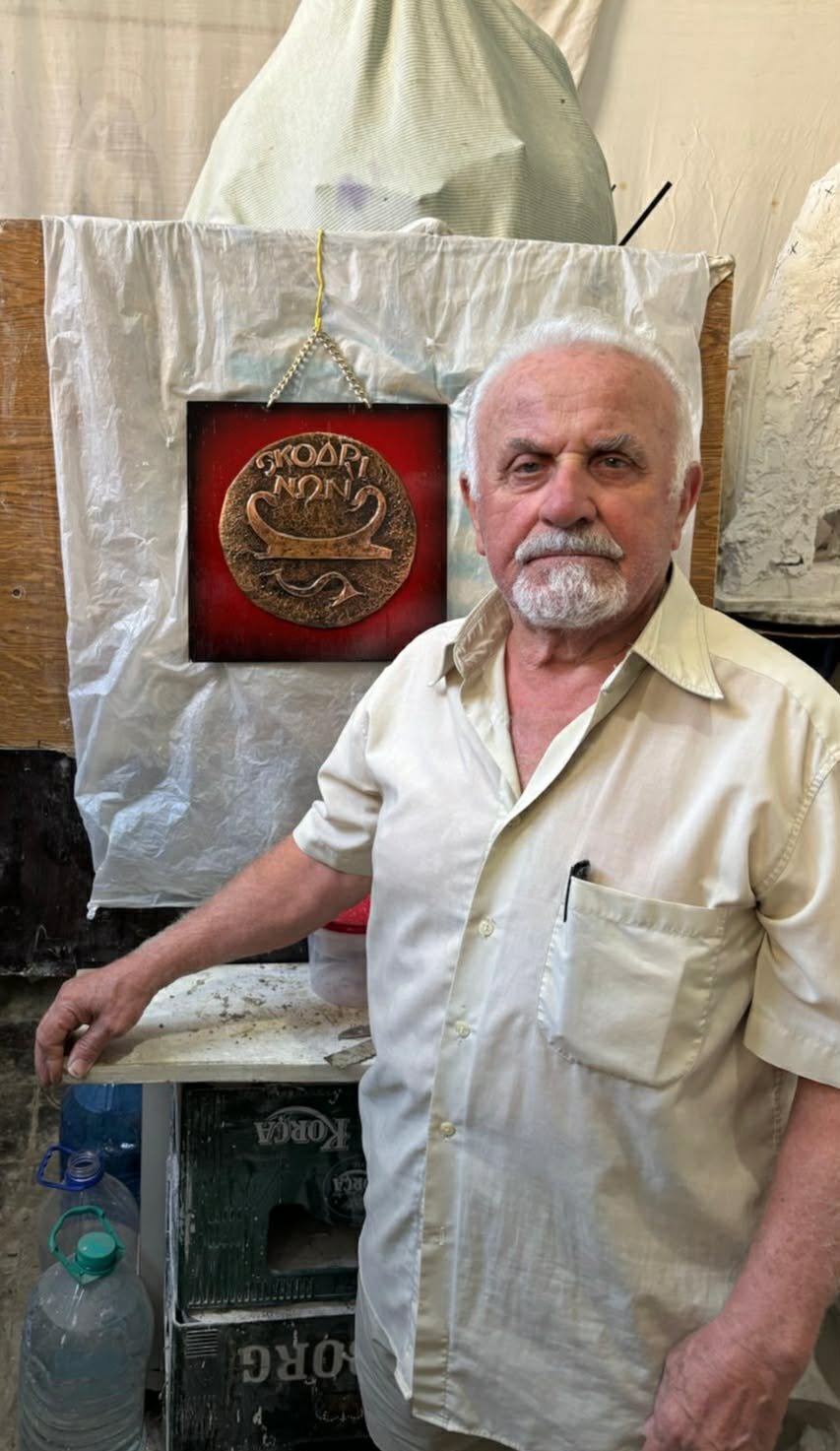
Termi ‘Handmade’,”i punuar me dorë” mund t’i referohet, punimit artizanal, ku objekte të dobishme dhe dekorative krijohen me dorë. Kurse një vepër artistike është një krijim origjinal që shpreh një ide, emocion ose vizion estetik në një formë vizuale, grafike ose tredimensionale. Në gjuhën e përditshme, një vepër artistike i referohet çdo krijimi të bërë me aftësi, imagjinatë dhe një qëllim estetik. Ai komunikon ndjenjat ose konceptet njerëzore nëpërmjet mediumeve shqisore ose fizike. Termi mjeshtëri, ka kuptimin, punime të mjeshtërisë artistike, si qeramika ose punimet metalike. E fillova esenë time për një punim në bakër të skulptorit kombëtar Ferid Kola me një interpretim teorik, mbasi me të vërtetë ky lloj punimi ‘bëhet me dorë’, por ka në thelb element artistik. Sulptori Ferid Kola ka jetësuar figura të mëdha kombëtare, por edhe punët e vogla artistike të Ferid Kolës, kanë elementë artistik, prandaj marrin vlera të veçanta. Një punim në bakër 25X20 cm, titulluar “Scodrinon”, është shenjë artistike e kujtesës historike të qytetit të Shkodrës.
Scodrinon lidhet me emërtimin e lashtë të Shkodrës.
Scodrinon lidhet me emërtimin e lashtë të Shkodrës, duke e vendosur veprën në një horizont historik dhe identitar. Në një këndvështrim semiotik, emri “Scodrinon” funksionon si shenjë e qytetit, por edhe si shenjë e kujtesës së tij historike.
Puna në bakër, 25 × 20 cm, e përshtat këtë ide me një material që ka karakter të veçantë metalik, i fortë, por njëkohësisht i përpunueshëm dhe i ndjeshëm ndaj kohës. Bakri mund të lexohet simbolikisht si ndërmjetës midis tokës, historisë dhe qytetërimit; gjurmët dhe patina e tij e bëjnë kohën pjesë të vetë veprës. Titulli nuk është thjesht identifikues. Ai krijon një dialog midis ‘Shkodrës së lashtë dhe Shkodrës së sotme’. Forma skulpturore mund të shihet si një “shenjë e kondensuar” e qytetit, nuk përfaqëson vetëm një vend gjeografik, por një shtresë kujtese, identiteti dhe vazhdimësie. Në këtë kuptim, Ferid Kola e trajton Shkodrën jo vetëm si objekt artistik, por si simbol kulturor. Në një formulim më akademik: “Scodrinon” i Ferid Kolës mund të interpretohet si një shenjë plastike e kujtesës së Shkodrës. Bakri, si material me qëndrueshmëri dhe njëkohësisht me aftësi për të regjistruar gjurmët e kohës, shndërrohet në bartës të një simbolike historike. Vepra ndërton kështu një marrëdhënie semiotike midis emrit të lashtë, materialit dhe identitetit kulturor të qytetit. Vetë shkrimi “Scodrinon” funksionon si një shenjë e lashtësisë, duke e larguar veprën nga një paraqitje thjesht moderne. Në qendër kemi një formë të stilizuar të një barke, e cila mund të interpretohet si shenjë e lëvizjes, udhëtimit, shkëmbimit dhe lidhjes së Shkodrës me hapësirën ujore. Poshtë saj, forma e valëzuar krijon qartë një motiv ujor. Kështu ndërtohet një marrëdhënie simbolike mes qytetit dhe ujit. Kjo e bën veprën më shumë simbol sesa ilustrim.“Scodrinon” i Ferid Kolës është një objekt i vogël në përmasë, por i gjerë në hapësirën e kuptimit. Në 20 × 25 cm, artisti kondenson emrin, kujtesën, ujin dhe lashtësinë në një shenjë të vetme plastike. Bakri funksionon si bartës i kohës, ndërsa rrethi si hapësirë e kujtesës. Anija dhe vala e vendosin qytetin në një marrëdhënie me lëvizjen dhe ujin. Në këtë mënyrë, “Scodrinon” mund të lexohet si një metaforë artistike e vazhdimësisë së Shkodrës nga lashtësia drejt së tashmes.” Si përfundim po citoj një thënie të Pablo Picasso. “Arti është një ‘gënjeshtër’ që na bën ta kuptojmë të vërtetën.” Kuptimi i kësaj thënie është se, paraqitjet artistike mund të mos jenë regjistrime historike të mirëfillta, por ato shërbejnë si metafora që zbulojnë të vërteta më të thella njerëzore dhe historike.
“Scodrinon” by sculptor Ferid Kola, an artistic emblem of his historical memory.
The term ‘handmade’ and the work of art.
The term ‘handmade’ can refer to artisanal craftsmanship, where functional and decorative objects are created by hand. A work of art, on the other hand, is an original creation that expresses an idea, emotion, or aesthetic vision in a visual, graphic, or three-dimensional form. In everyday language, a work of art refers to any creation made with skill, imagination, and an aesthetic purpose; it communicates human feelings or concepts through sensory or physical media. The term “craftsmanship” implies works of artistic skill, such as ceramics or metalwork. I began this essay on a copper piece by the renowned sculptor Ferid Kola with a theoretical interpretation because, while this type of work is indeed “handmade,” it possesses an intrinsic artistic element. Sculptor Ferid Kola has brought great national figures to life, yet even his smaller artistic works contain artistic elements, thereby acquiring special value. A 25×20 cm copper piece titled “Scodrinon” serves as an artistic emblem of the historical memory of the city of Shkodra.
Scodrinon is linked to the ancient name of Shkodra.
Scodrinon is linked to the ancient name of Shkodra, situating the work within a historical and identity-based context. From a semiotic perspective, the name “Scodrinon” functions as a signifier of the city, as well as a signifier of its historical memory. The copper work measuring 25 × 20 cm, adapts this concept through a material possessing a distinctive metallic character: robust, yet simultaneously malleable and sensitive to the passage of time. Copper can be read symbolically as a mediator between earth, history, and civilization; its traces and patina incorporate time itself into the artwork. The title serves a purpose beyond mere identification; it establishes a dialogue between “ancient Shkodra” and “contemporary Shkodra.” The sculptural form can be viewed as a “condensed sign” of the city, representing not merely a geographical location but a stratum of memory, identity, and continuity. In this sense, Ferid Kola treats Shkodra not only as an artistic subject but as a cultural symbol. To put it in more academic terms: Ferid Kola’s “Scodrinon” can be interpreted as a plastic signifier of Shkodra’s memory. Copper a material that is both durable and capable of recording the marks of time transforms into a vessel for historical symbolism. Thus, the work constructs a semiotic relationship linking the ancient name, the material, and the city’s cultural identity. The inscription “Scodrinon” itself functions as a signifier of antiquity, distancing the work from a purely modern aesthetic. At the center lies the stylized form of a boat, which can be interpreted as a symbol of movement, travel, exchange, and Shkodra’s connection to the water. Beneath it, a wavy shape clearly evokes a water motif, thereby establishing a symbolic relationship between the city and the water. This renders the work a symbol rather than a mere illustration. Ferid Kola’s “Scodrinon” is small in physical dimensions yet vast in its scope of meaning. Within a 20 × 25 cm space, the artist condenses name, memory, water, and antiquity into a single sculptural form. Copper serves as a vessel for time, while the circle acts as a space for memory. The boat and the wave place the city in a relationship with movement and water. Thus, “Scodrinon” can be read as an artistic metaphor for Shkodra’s continuity from antiquity to the present. In conclusion, I quote Pablo Picasso: “Art is a ‘lie’ that makes us realize the truth.” The meaning of this statement is that artistic representations may not be literal historical records, yet they serve as metaphors that reveal deeper human and historical truths.